The Spicy Nano Banana: When Tropical Sweetness Meets Fierce Heat
Discover the unexpected alchemy of caramelized banana meeting fierce chili heat. This boundary-crossing recipe transforms humble ingredients into bite-sized flavor explosions where tropical sweetness collides with peppery fire. A culinary experiment that challenges convention—and rewards the adventurous palate with unforgettable complexity.
EXPERIMENTAL CUISINESPICY FOODFRUIT DESSERTS
Nano Spicy Team
11/21/20252 min read
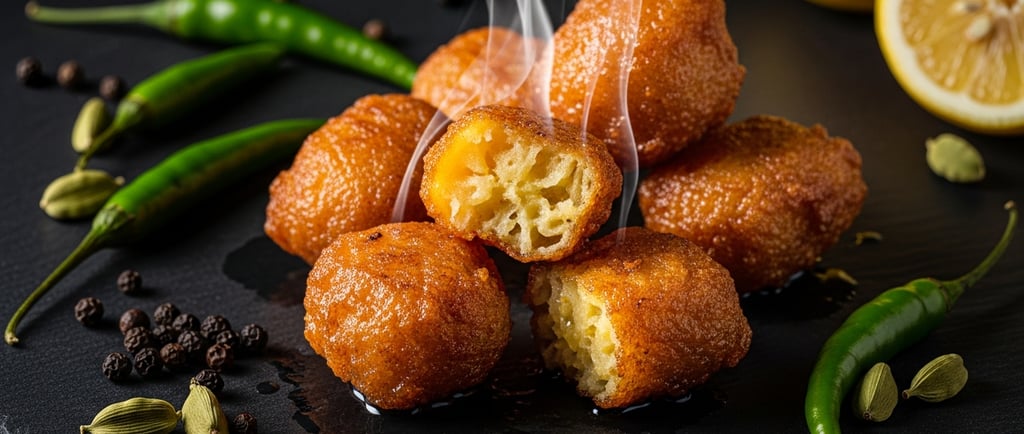
Imagine biting into something that shouldn't exist—a morsel where caramelized banana sweetness collides with the sharp bite of green chili, where tropical warmth embraces peppery fire. This is the spicy nano banana, a culinary experiment that challenges conventional flavor boundaries.
The Science of Unexpected Harmony
At first glance, pairing ripe bananas with hot spices seems counterintuitive. Yet across South Asian and Southeast Asian cuisines, this marriage of opposites has ancient roots. The secret lies in understanding flavor chemistry: when opposing taste receptors activate simultaneously, they create complexity rather than confusion.
Key Flavor Principles:
Capsaicin (from chilies) and piperine (from black pepper) trigger heat receptors
Natural sugars in ripe bananas caramelize during cooking, creating depth
Cardamom's eucalyptol compounds provide cooling counterbalance
Citric acid from lemon brightens and prevents enzymatic browning
The result? A dynamic sensory experience that keeps the palate engaged.
Crafting the Spicy Nano Banana Fritter
The Foundation
Begin with overripe bananas—those spotted specimens typically destined for banana bread. Their concentrated sugars and soft texture make them ideal for mashing into a base that holds together during frying while developing rich caramelization.
The Spice Architecture
The heat profile builds in layers. Green chilies provide bright, sharp spiciness. Black pepper contributes earthy warmth that lingers. Cardamom—that ancient spice prized along the Malabar Coast—adds aromatic complexity with subtle cooling notes. Fresh lemon juice cuts through richness while sugarcane juice (or jaggery syrup) amplifies natural sweetness without refined sugar's one-dimensional quality.
A critical note: Mediterranean herbs like oregano create discord here. Instead, cumin seeds or fresh ginger maintain flavor cohesion while adding complementary dimensions.
The Technique
Mash 3-4 overripe bananas, preserving some texture. Fold in 2 tablespoons sugarcane juice, juice from half a lemon, 1 teaspoon black pepper, 2 crushed cardamom pods, and 1-2 minced green chilies. Add chickpea flour gradually—3-4 tablespoons—until the mixture forms cohesive, coin-sized portions.
Heat coconut oil or ghee to medium temperature. The Maillard reaction—that complex chemical transformation creating hundreds of aromatic compounds—requires precise heat. Too high burns exteriors; too low yields greasy results. Fry small portions for 2-3 minutes per side until golden-brown.
The Philosophy of Fusion
What makes this dish compelling isn't novelty for its own sake. Rather, it represents thoughtful ingredient pairing based on chemical compatibility and cultural precedent. Banana appears in savory contexts throughout Kerala, where plantains meet curry leaves and mustard seeds. Filipino cuisine features banana fritters with various spice profiles. This recipe extends that tradition into new territory.
Serving and Context
These fritters occupy liminal space—neither dessert nor conventional snack. Serve warm with cooling yogurt sauce, honey-lime drizzle, or fresh mint chutney. The bite-sized format makes them ideal for exploratory tasting, allowing diners to calibrate their relationship with unconventional flavor combinations.
Beyond the Recipe
Creating the spicy nano banana invites broader reflection on culinary innovation. The best fusion cooking respects ingredient chemistry while boldly crossing cultural boundaries. It requires understanding why certain flavors harmonize—not through tradition alone, but through the physical and chemical properties that govern taste.
This small, fiery-sweet morsel demonstrates that creativity in cooking mirrors scientific inquiry: hypothesis, experimentation, analysis, refinement. Each bite becomes data, each variation a new experiment in the ongoing quest to understand how flavors interact and surprise.